



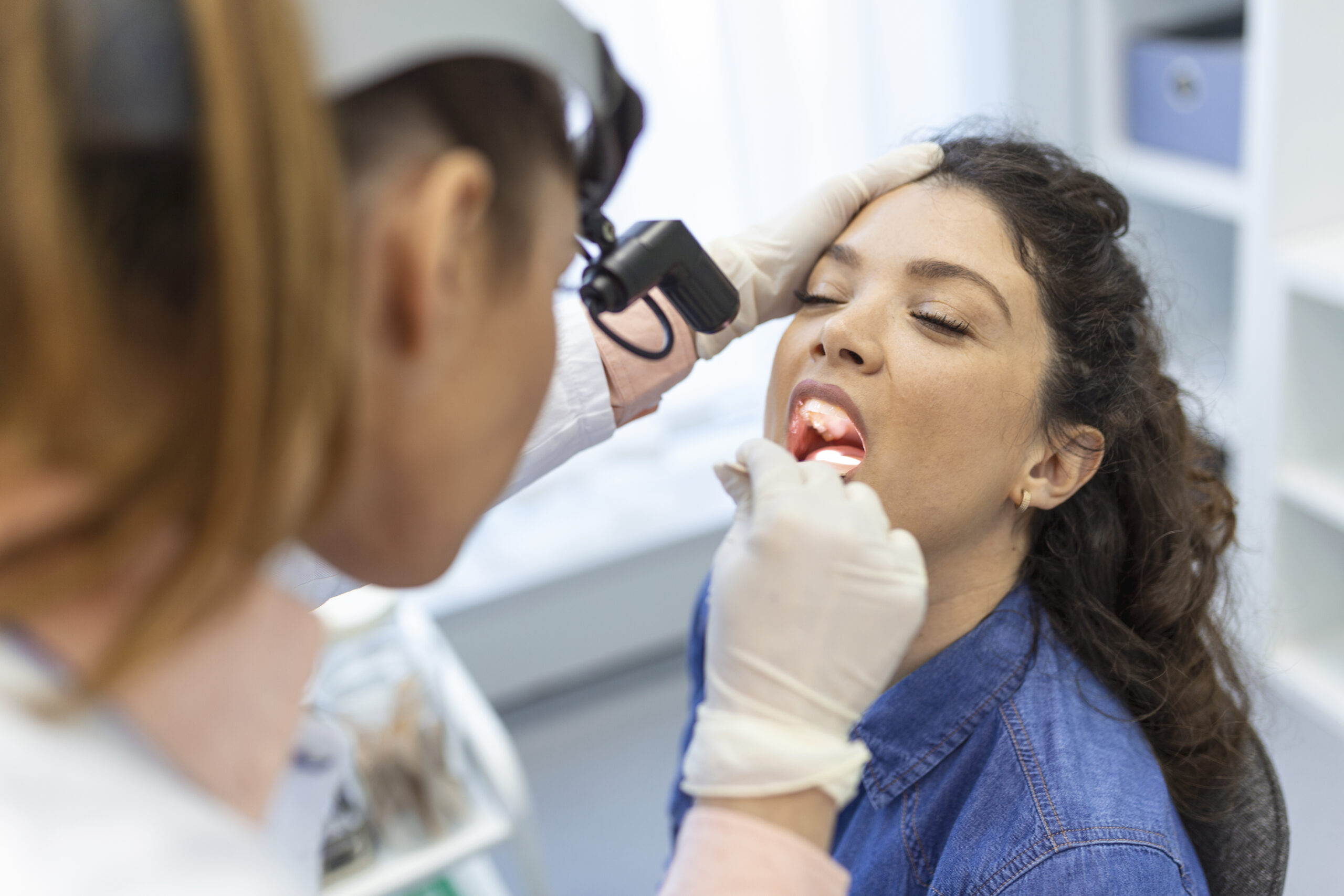
If you or your dentist have noticed an area or spot of discoloration, a non-healing sore, or a raised bump on your gums or cheek – it may be time to get the area evaluated. If your dentist feels that there is a concern, they may refer you for an oral biopsy. A oral biopsy is when the surgeon removes all or a portion of the area in question then submits it to an oral pathologist to be evaluated. This type of analysis will provide a definitive diagnosis so that our patients can have peace of mind and the dental team will be able to provide appropriate follow up treatment if indicated.
What Is an Oral Biopsy?
An oral biopsy is a diagnostic procedure that examines suspicious tissue at the cellular level, something a visual exam alone can’t confirm. Depending on the size, location, and appearance of the area, our team uses one of a few approaches:
- Incisional Biopsy – A small portion of a larger lesion is removed for lab analysis, typically used when the area is too large to remove entirely.
- Excisional Biopsy – The entire lesion is removed, often used for smaller spots that can be fully treated during the same visit.
- Brush Biopsy – A minimally invasive cell sample is collected for cases where a more conservative first step is appropriate.
Signs That May Warrant an Oral Biopsy
Your dentist or our team may recommend a biopsy if you have:
- A sore or ulcer that hasn’t healed within two weeks
- A white, red, or dark patch of tissue that wasn’t there before
- A lump, thickening, or rough patch on the gums, cheek, tongue, or roof of the mouth
- Persistent numbness or pain in a specific area with no clear cause
- A lesion that has changed in size, shape, or color over time
The Oral Biopsy Process
Here’s what you can expect during your visit:
- Clinical Evaluation – Our team examines the area, and imaging such as a digital X-ray or 3D imaging may be used if the lesion involves underlying bone.
- Anesthesia – Local anesthesia numbs the area completely, with sedation options available for patients who feel anxious about the procedure.
- Tissue Removal – The surgeon carefully removes all or part of the tissue in question, depending on the biopsy type recommended for your case.
- Lab Submission – The sample is sent to an oral pathologist, who examines it under a microscope to reach a definitive diagnosis.
After Your Oral Biopsy – Recovery & Healing
Recovery from an oral biopsy is usually quick and manageable:
- Mild soreness or tenderness at the site for a few days, typically controlled with over-the-counter pain medication
- Specific aftercare instructions covering diet and gentle oral hygiene near the site
- A follow-up appointment to review your pathology results and discuss next steps, if any are needed
Who Should Consider an Oral Biopsy?
Anyone with a persistent, unexplained change in their oral tissue is a reasonable candidate for evaluation. This procedure, part of our broader surgical therapy services, is often recommended by a general dentist who has spotted something during a routine exam, but you don’t need a referral to have a concerning area looked at.
Schedule Your Appointment
Noticed something unusual in your mouth that hasn’t gone away? Contact River Place Periodontics today to schedule an evaluation and get the answers you need.
Why Choose River Place Periodontics for Oral Biopsies?
- Prompt evaluation and same-visit biopsy when appropriate
- Clear communication of pathology results and next steps
- A comfortable, minimally invasive approach tailored to each patient
- Close coordination with your referring dentist throughout the process