
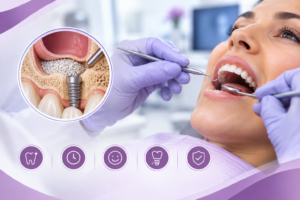
An oral bone graft is a procedure that places natural or synthetic bone material in the jaw to rebuild lost bone, most often so a dental implant can be anchored securely. Healing typically takes about three to nine months, depending on the site and material, while cost depends on graft size, material, and location. This guide explains how the procedure works, which graft materials exist, what recovery involves, and how periodontists decide when a graft is necessary.
What Is an Oral Bone Graft?
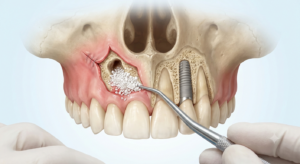
An oral bone graft adds bone or a bone substitute to an area of the jaw that has lost height, width, or density. The material acts as a scaffold. Over several months, the patient’s natural bone grows into it and gradually replaces much of it, creating a firmer foundation.
Jawbone shrinks when it no longer supports a tooth. Gum disease, injury, long-standing tooth loss, and extractions all contribute. Riverplace Periodontics reports that up to 25 percent of bone width can disappear within the first year after tooth removal, which is why timing matters. For bone lost around natural teeth, periodontists often use regenerative bone grafting, which combines graft material, membranes, and tissue-stimulating proteins to encourage regrowth.
Why Periodontists Recommend Bone Grafting for Dental Implants
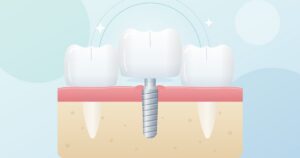
Bone grafting for dental implants is common because an implant depends entirely on the surrounding bone. The titanium post must fuse with the jaw over roughly three to four months, and thin or soft bone raises the risk of loosening or failure. A dental bone graft is usually considered when:
- A tooth was lost long ago and the ridge has narrowed
- Upper back teeth are missing and the sinus has dropped into the space
- Gum disease has destroyed bone around natural teeth
- An extraction is planned and an implant will follow later
- Imaging shows insufficient bone height or width for an implant
Not every graft requires a separate surgery. When enough native bone remains for stability, graft and implant can sometimes be placed during the same appointment. Periodontists make that decision using a clinical exam and imaging such as 3D scans.
Types of Oral Bone Graft Materials
Dentistry uses four main material categories, classified by the source of the bone.
| Graft type | Source | Key points |
| Autograft | Patient’s own bone, often from the chin or hip | Contains living cells and carries no rejection risk, but needs a second surgical site |
| Allograft | Screened human donor bone | Avoids a second surgical site, though integration may be slower |
| Xenograft | Animal bone, commonly bovine | Slow-resorbing scaffold that holds volume well |
| Alloplast | Synthetic materials such as calcium phosphate | Fully manufactured, with resorption rates that vary by product |
Material choice depends on defect size, location, healing goals, and general health. For extraction sites, Riverplace Periodontics describes freeze-dried bone allograft (FDBA), which comes from a screened donor and must meet American Association of Tissue Banks standards before use.
Common Oral Bone Graft Procedures
Different bone-loss patterns call for different approaches.
Socket Preservation After Extraction
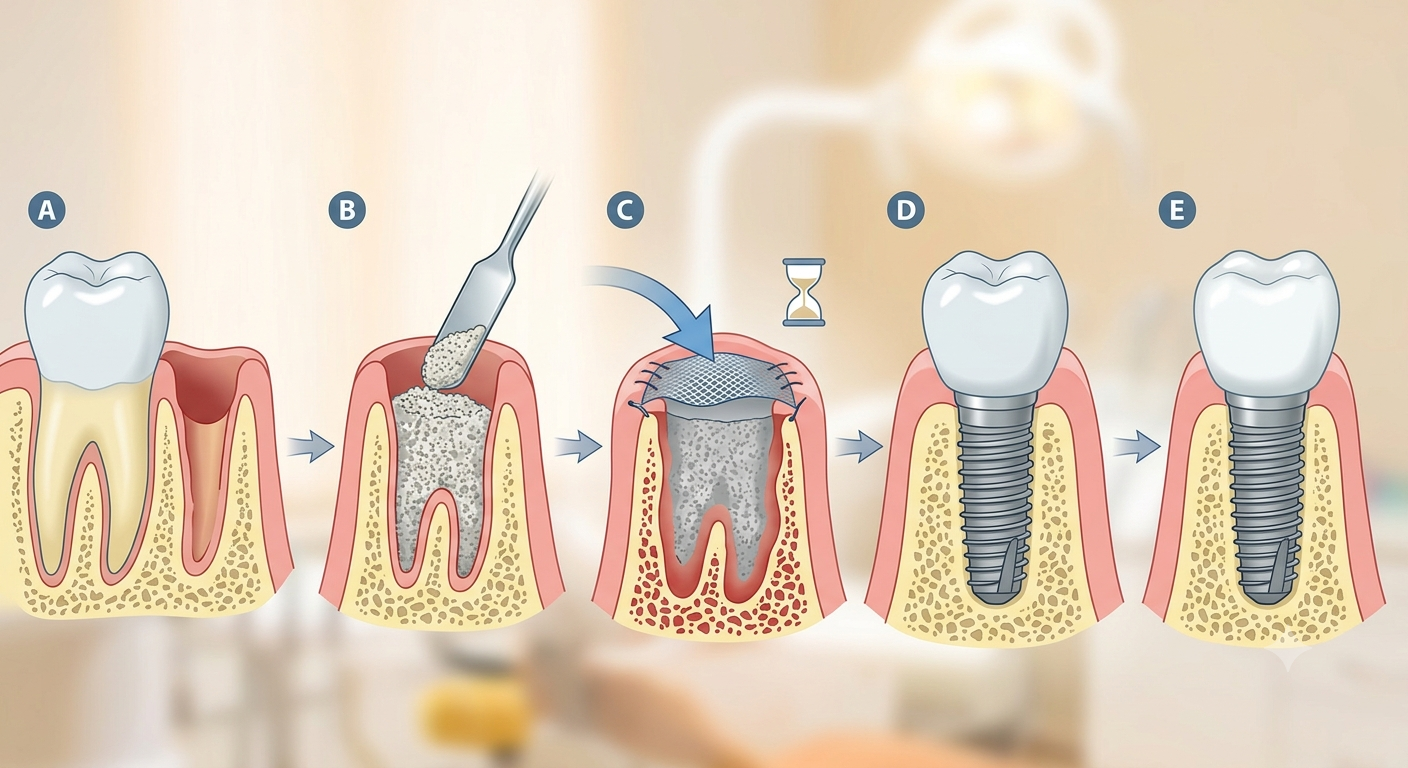
A bone graft after tooth extraction fills the empty socket immediately to maintain bone height and width. Dentists often refer patients for a socket preservation bone graft when an implant is expected later. The graft may be covered with a membrane, and it usually matures over four to six months.
Ridge Augmentation
Ridge augmentation rebuilds the width or height of a jaw ridge that has collapsed. It is usually completed before implant placement, since a narrow ridge cannot hold an implant of adequate size.
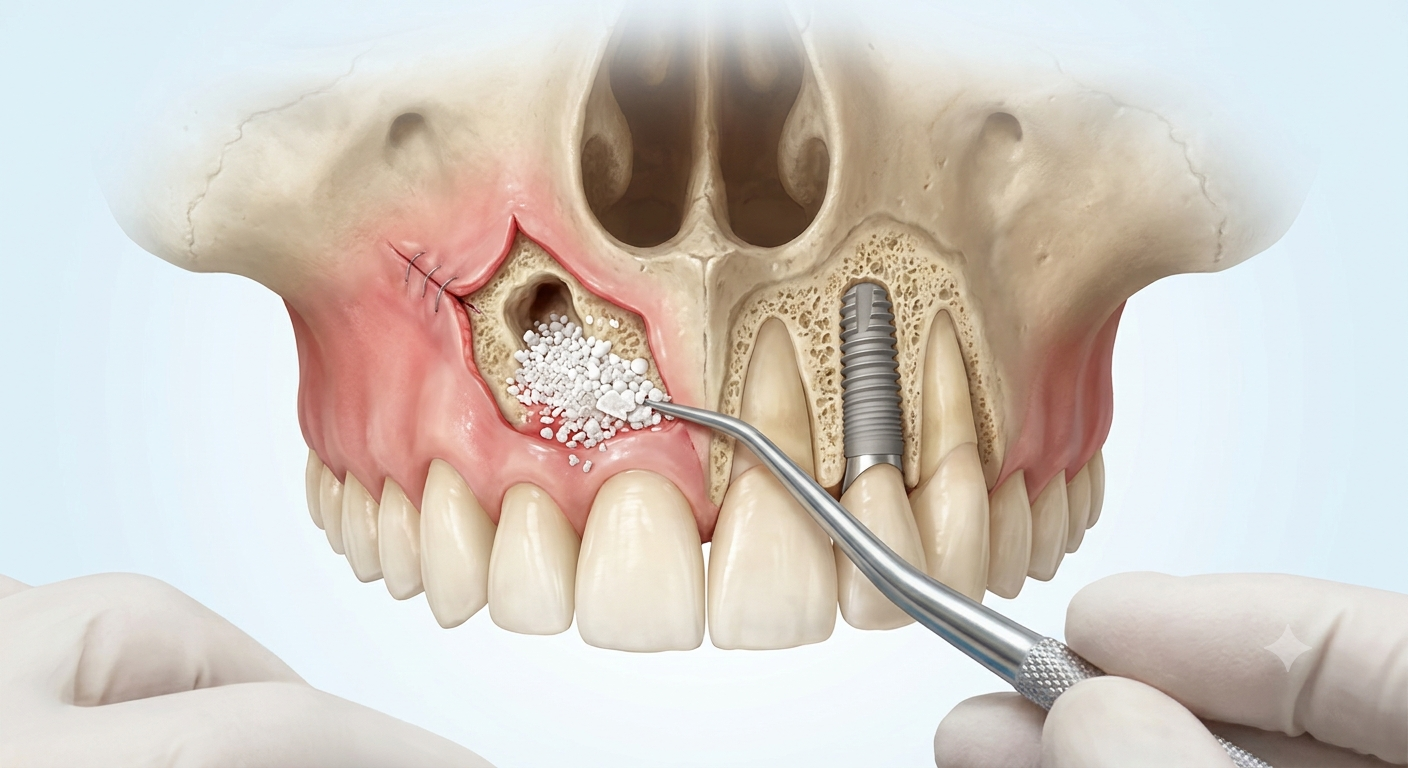
Sinus Lift
A sinus lift adds graft material beneath the sinus membrane when the upper jaw bone is too short. Riverplace Periodontics’ guide to sinus bone augmentation describes initial healing of one to two weeks, with the graft maturing over four to nine months.
The Oral Bone Graft Procedure Step by Step
Exact steps vary by site, but most cases follow this sequence:
- Evaluation: An exam, X-rays, or 3D imaging measure bone volume and map nearby structures.
- Anesthesia: Local anesthesia numbs the area, and sedation may be added depending on the case.
- Site preparation: The gum is gently lifted and any diseased tissue is cleaned away.
- Graft placement: Bone material is packed into the defect or socket.
- Protection: A membrane may cover the graft, and the gum is closed with sutures.
- Healing: Follow-up visits monitor integration before an implant or restoration is planned.
Oral Bone Graft Recovery and Healing Timeline
Most patients experience mild swelling and tenderness for a few days. Aftercare generally includes:
- Eating soft foods and avoiding chewing on the graft site
- Following instructions for rinsing and oral hygiene
- Avoiding smoking, which slows healing
- Skipping straws and forceful nose blowing after a sinus lift
- Attending every follow-up visit
Healing windows differ by procedure:
| Procedure | Typical healing window |
| Socket preservation | 4 to 6 months |
| Sinus lift | 1 to 2 weeks of initial healing, then 4 to 9 months for the graft |
| Regenerative grafting around natural teeth | About 6 months before reassessment |
| Implant fusion after grafting | 3 to 4 months |
Implant placement follows once imaging shows the graft has matured, and the implant then needs its own fusion period before the final tooth is attached.
Is an Oral Bone Graft Painful?
Treatment is performed with local anesthesia, so little is felt during the procedure. For socket grafts, Riverplace Periodontics describes mild swelling and tenderness for a few days that over-the-counter pain medication can manage.
Oral Bone Graft Cost and Insurance
Costs vary widely. Fee-survey data compiled by Pearl from American Dental Association figures places the national range for a single dental graft procedure code at about $680 to $1,790, averaging near $1,045 as of May 2026. Larger reconstructions such as ridge augmentation and sinus lifts typically cost more than a small socket graft, and the implant itself is billed separately.
Factors that move the price include:
- Amount and type of graft material
- Complexity of the site and use of a membrane
- Sedation choice
- Whether the implant is placed at the same time
- Geographic area and provider
On insurance, Zocdoc’s cost guide reports that dental plans often cover 50 to 80 percent of a medically necessary graft after the deductible, though many plans limit or exclude implant-related benefits. A written estimate and a benefits check before treatment give the most accurate figure.
Risks and Candidacy
Bone grafting is routine, yet complications can occur. These include infection, swelling, loss of graft particles, graft failure, and, with sinus lifts, tearing of the sinus membrane. Smoking and poorly controlled diabetes can slow healing, so periodontists review medical history, medications, and habits before recommending treatment. Patients should report fever, worsening pain, or swelling that increases after the first few days so that a periodontist can intervene early.
Conclusion
An oral bone graft rebuilds the foundation that implants and natural teeth rely on, and planning early, especially around an extraction, often keeps later treatment simpler. Matching the graft material and healing timeline to each site is what makes results predictable.
Riverplace Periodontics in Milwaukie, Oregon, offers bone grafting alongside dental implant care. Patients weighing an extraction or implant can request a dental implant consultation to learn whether a graft belongs in the treatment plan.
Additional details about the practice and its services are available at https://riverplaceperiodontics.com/.