



When a patient is referred to our office for the replacement of missing teeth, an evaluation of the remaining bone and gum tissue is completed. For dental implants to be placed in the most ideal location, there needs to be adequate bone remaining – both vertically and horizontally.
More bone loss can occur the longer a patient has been missing a tooth or teeth, as the site will atrophy with time. If significant loss of bone height or width has occurred, a ridge augmentation must be performed before a dental implant can be placed. During the jaw bone augmentation procedure, your surgeon will lift away the overlying gum tissue to expose the bony defect. This defect is then cleaned out and filled with bone grafting material and covered with a resorbable and/or non-resorbable membrane to protect the graft particles. This bone graft material substance is called freeze-dried bone allograft (FDBA). FDBA is obtained from a donor and every vial must pass rigorous testing and the strictest guidelines of the American Association of Tissue Banks. This verifies that every graft is free of disease before being used on a patient. After six months of healing, your natural jaw bone augmentation has partially replaced the grafted bone. Once healing is complete, the bone now has the ideal dimensions in both quality and quantity for dental implant placement.
Ridge Augmentation Near You
Not every patient missing a tooth requires ridge augmentation, but the longer a tooth has been absent, the more likely bone resorption has progressed. Ridge augmentation is a bone grafting procedure at River Place Periodontics designed to rebuild lost jawbone volume, creating a site capable of supporting a stable, long-lasting dental implant.
What Is Ridge Augmentation?
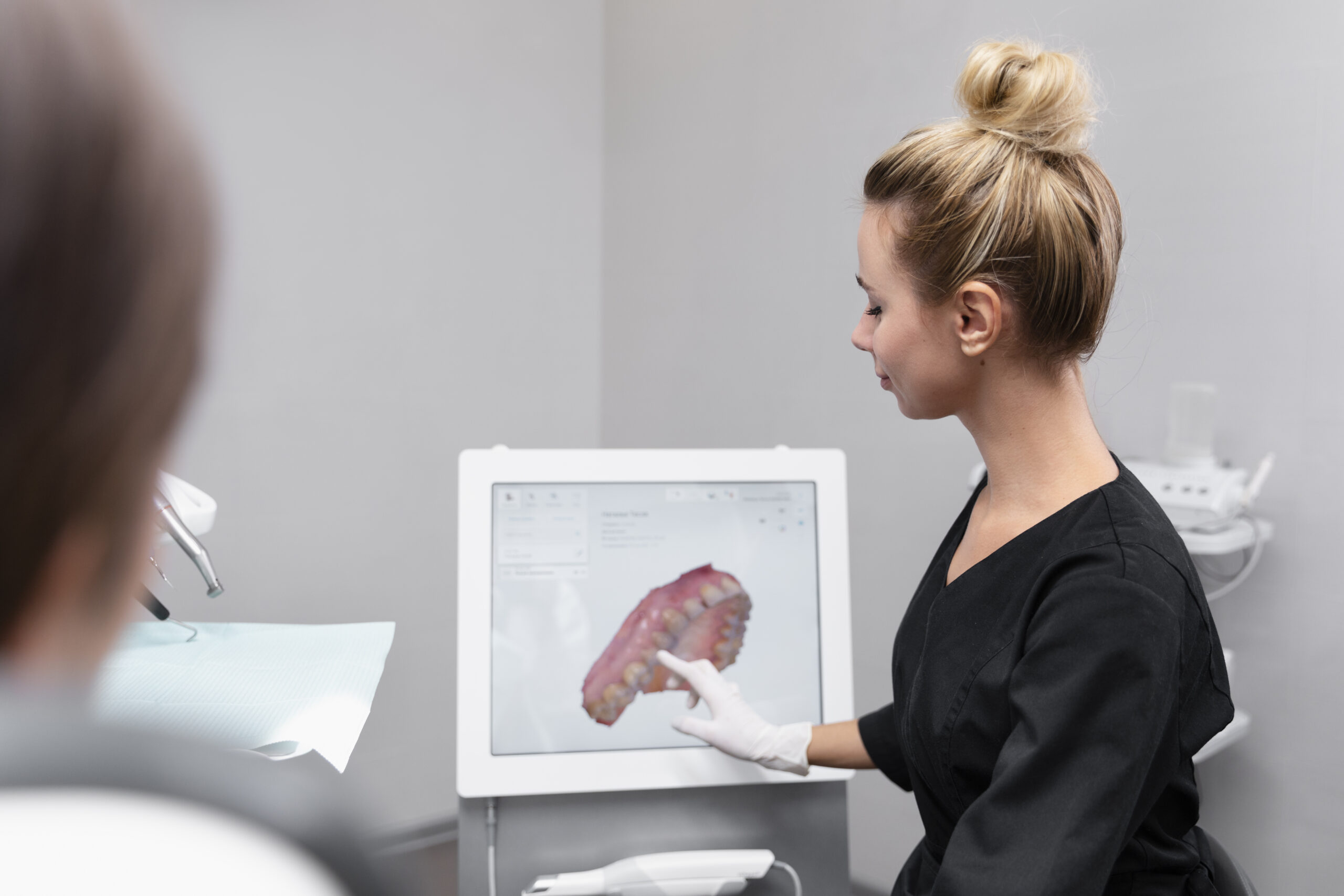
Bone loss doesn’t happen uniformly – some patients lose height, others lose width, and many experience a combination of both. A thorough clinical evaluation, often supported by 3D imaging, is essential before any implant treatment plan is finalized. This advanced imaging allows our team to measure bone dimensions with precision and determine exactly how much augmentation, if any, is needed.
There are two main types of bone loss addressed by ridge augmentation:
- Height Loss – Reduction in the vertical dimension of the jawbone.
- Width Loss – Reduction in the horizontal dimension of the jawbone, sometimes occurring together with height loss.
Reasons You May Need Ridge Augmentation
Ridge augmentation is often recommended for patients who have:
- Been missing a tooth for an extended period of time
- Worn removable partials or dentures for extended periods
- Lost teeth due to periodontal disease
- Insufficient bone height or width to support a stable dental implant
In these cases, ridge augmentation isn’t simply a recommended step – it’s often the only way to create a site capable of supporting a stable, long-lasting dental implant.
The Ridge Augmentation Process
Here’s what you can expect during ridge augmentation treatment:
- 3D Imaging & Evaluation – Advanced imaging measures bone dimensions with precision to determine exactly how much augmentation is needed.
- Graft Placement – FDBA (freeze-dried bone allograft), sourced from donors who meet strict American Association of Tissue Banks standards, is placed to stimulate new bone growth.
- Membrane Barrier – A membrane barrier protects the graft site from soft tissue interference, allowing your body to rebuild lost bone volume predictably over time.
- Healing Period – A full six-month healing window ensures the augmented site reaches the strength and density needed to support an implant for decades to come.
Combining Ridge Augmentation With Other Treatments
In some cases, ridge augmentation is performed alongside other procedures to optimize outcomes:
- Esthetic Services – For patients also dealing with gum recession or thin tissue near the augmentation site, our esthetic services may be recommended to enhance both function and appearance.
- Extraction With Augmentation – If extraction and augmentation are needed at the same visit, our team coordinates the process seamlessly, much like the approach used in tooth removal combined with socket grafting.
Who Is a Candidate for Ridge Augmentation?
If you recognize your situation in the reasons above – a long-missing tooth, years in removable partials or dentures, bone loss from periodontal disease, or simply not enough bone volume to support an implant – a consultation can confirm whether ridge augmentation is the right next step for you.
Schedule Your Appointment
Need ridge augmentation to prepare for a dental implant? Contact River Place Periodontics today to schedule your consultation and find out exactly how much augmentation, if any, you need.
Why Choose River Place Periodontics for Ridge Augmentation?
Here’s why patients select us for ridge augmentation:
- Advanced imaging technology that takes the guesswork out of treatment planning
- Rigorously tested, donor-sourced graft material for predictable, safe healing
- A membrane barrier technique that protects the graft site during recovery
- Close communication with your referring dentist throughout the augmentation and healing process, ensuring a smooth transition into implant placement once your bone has fully matured