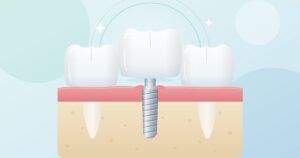


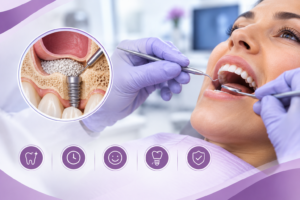

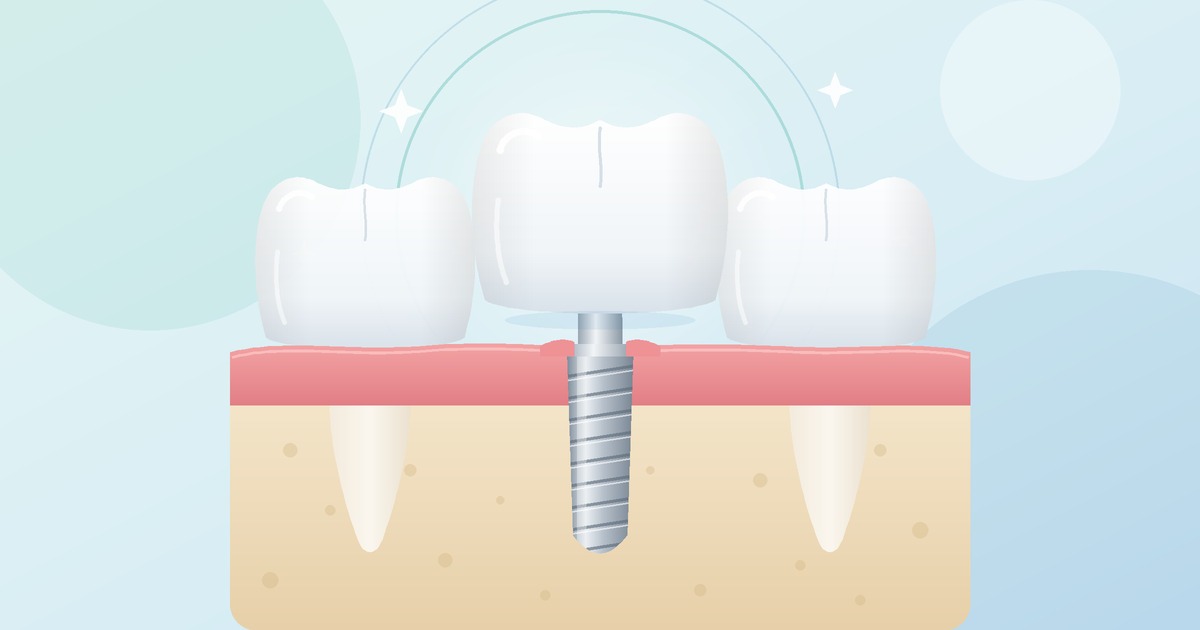
A dental implant is a titanium post placed in the jawbone to replace a missing tooth root, then topped with a custom crown, bridge, or denture. Patients searching for dental implants near me typically want a provider who can evaluate bone health, place the implant, and coordinate the final restoration. In Milwaukie, Oregon, periodontists such as the team at Riverplace Periodontics focus on the gum and bone structures that implants depend on.
What Are Dental Implants?
Dental implants are a tooth replacement solution that restores both appearance and function. The implant is made of biocompatible titanium, the same type of material used in artificial knees and hips. It can replace a single tooth, replace several teeth, or anchor a denture in the upper or lower jaw.
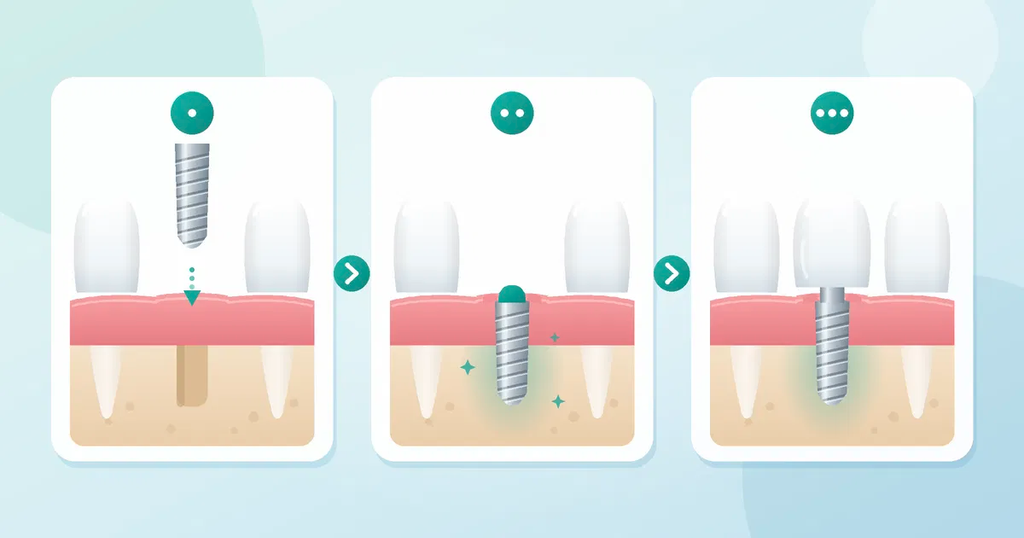
After placement, the surrounding bone usually needs three to four months to fuse to the implant surface. A custom restoration is then made and attached. Implants have been used for several decades, and approved, tested systems have a strong success record.
Why Replace Missing Teeth?
A gap affects more than appearance. Common problems linked to missing teeth include:
- Difficulty chewing, which can limit nutrition
- Neighboring teeth shifting or tilting into the empty space
- Dentures or partials that slip during talking or eating
- Embarrassment and less enjoyment of favorite foods
Jawbone can also shrink after tooth loss, which is one reason timing matters when implants are planned.
Dental Implants vs. Bridges vs. Dentures
| Feature | Dental Implant | Bridge | Denture |
| What it replaces | Root and crown | Crown only, anchored to neighbors | Crown only, rests on gums |
| Neighboring teeth | Not altered | Reduced to support the bridge | Partials may clasp neighbors |
| Stability | Fused to jawbone | Fixed in place | Can slip or need adhesive |
| Bone support | Stimulates jawbone | No root replacement | No root replacement |
| Daily care | Brushing, flossing, checkups | Special cleaning under the bridge | Removal and cleaning daily |
The American Academy of Periodontology notes that, with proper care, an implant placed by a periodontist can last a lifetime.
How the Dental Implant Process Works
Step 1: Evaluation and Imaging
The process begins with an exam, digital X-rays, and often a Cone Beam CT scan. 3D imaging measures available bone volume and density and helps locate nerves and sinuses before implant placement.
Step 2: Bone Preparation When Needed
Some sites need extra support first. Tooth socket preservation after an extraction, ridge augmentation, and sinus augmentation all rebuild bone so an implant can stay stable.
A related Riverplace Periodontics article explains what sinus augmentation involves before dental implants.
Step 3: Implant Placement
Local anesthesia numbs the area during placement, and sedation may be available depending on the case. The titanium implant is positioned in the jawbone, and the gum is closed over or around it.
Step 4: Healing
Bone typically needs three to four months to anchor the implant. Cases involving bone grafting can take longer. Complete healing after a sinus lift, for example, usually takes four to nine months.
Step 5: Final Restoration
The patient then returns to a general dentist for impressions. A dental lab fabricates a custom crown, bridge, or denture, which is attached to the implant.
Who Is a Good Candidate for Dental Implants?
Candidacy depends on oral and general health rather than age alone. Riverplace Periodontics notes that patients 16 and older have chosen implants to replace single or multiple teeth or to support dentures. Good candidates generally have:
- Healthy gums, free of active periodontal disease
- Enough jawbone, or willingness to rebuild it with grafting
- Good overall health
- A commitment to daily cleaning and regular checkups
- No smoking during healing, since smoking can interfere with recovery
A comprehensive exam and imaging confirm whether these conditions are met.
What Affects the Cost of Dental Implants?
Costs vary because every mouth is different, and a reliable figure cannot be given before an exam. The main cost factors include:
- Number of implants needed
- Extractions, bone grafting, or sinus augmentation
- Imaging and diagnostic work
- Sedation, if used
- Type of restoration: single crown, bridge, or denture
- Insurance coverage and financing options
A written treatment plan separates these items, which makes it easier to compare providers fairly.
Why Choose a Periodontist for Dental Implants?
Periodontists specialize in gum tissue and the bone that supports teeth. The American Academy of Periodontology describes them as uniquely qualified to place and maintain dental implants.
Experience also matters. A peer-reviewed study of 26,865 implants reported an early failure rate of 1.3 percent for periodontists and 1.7 percent for oral surgeons, while stressing that success depends on several factors, including clinician experience. Anyone comparing teeth implants near me can reasonably ask how many implants a provider has placed.
Those researching teeth implants near me can read the Riverplace Periodontics overview of how implants restore chewing and appearance.
How to Choose Dental Implants Near Me
A short checklist helps narrow the options:
- Specialist training in gum and bone treatment
- On-site digital X-rays and 3D imaging
- Ability to manage bone grafting when needed
- A transparent, written cost estimate
- Coordination with the dentist who builds the final crown
- A clear aftercare and maintenance plan
Patient testimonials and examples of completed work add helpful context, though neither replaces an in-person evaluation.
Recovery and Long-Term Care
Mild swelling, minor bruising, and soreness are common in the first days, and soft foods make eating easier. An implant crown cannot decay, but the surrounding gums and bone can still become infected. Daily brushing, flossing, and regular professional cleanings protect that foundation. Following the post-operative instructions from the periodontist, including medication directions and activity limits, also supports smooth healing and protects the new implant.
Conclusion
The most useful takeaway is that implant success depends on healthy bone, healthy gums, careful planning, and an experienced clinician, not on proximity alone. Riverplace Periodontics in Milwaukie, Oregon, provides implant care supported by digital X-rays and 3D imaging.
Patients exploring dental implants near me can learn more about the implant services at Riverplace Periodontics and schedule a consultation to discuss individual needs.